
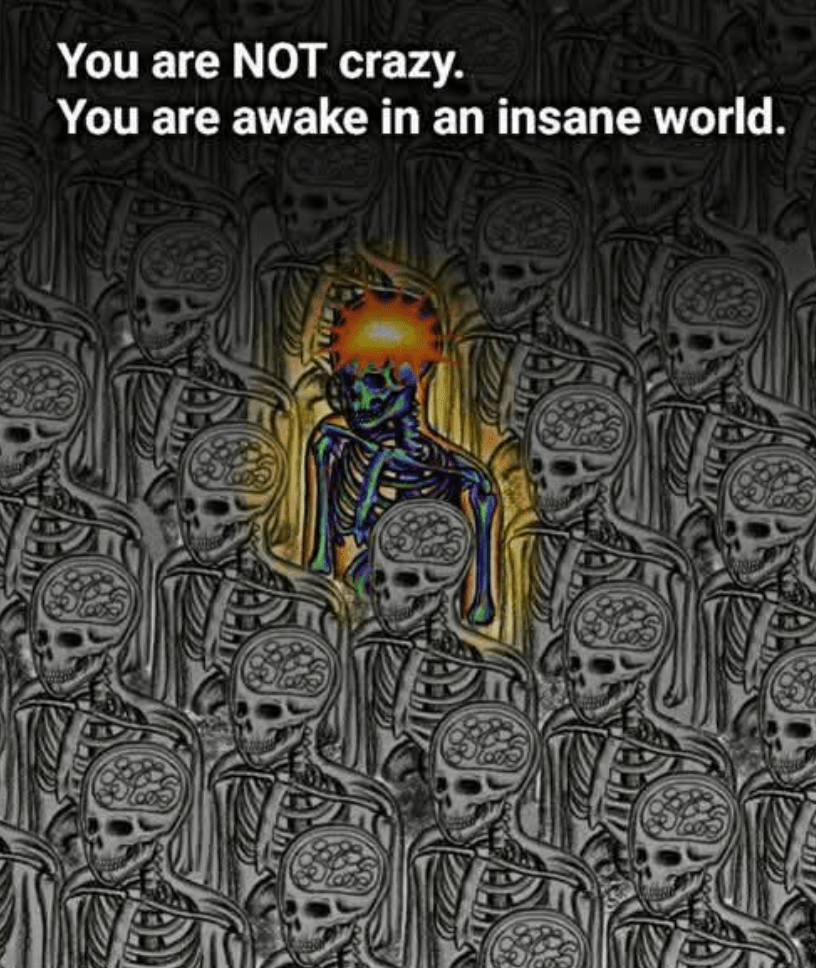
Most people sense it now—something is off. Not just in the world, but inside themselves. Despite more information, more technology, and more “self improvement” content than ever before, life feels increasingly unstable, exhausting, and directionless.
The promise of personal development was that if you worked on yourself—your mindset, your habits, your beliefs—things would improve. Yet for many, the opposite is happening. Emotional burnout, fractured relationships, financial anxiety, and a constant background sense of unease have become the norm.
Self-Perfected begins from a different premise: before improvement, motivation, or growth, there must be understanding. And not surface-level understanding, but a clear grasp of how the mind actually functions, how reality is navigated, and why the current approach to self development keeps looping people back into the same problems.
This is not another motivational framework. It is a crash course in reality.
Why a Crash Course in Self Improvement Is Necessary Today
If you look honestly at your own experience, life tends to move like a pendulum. You feel good, then bad. Motivated, then discouraged. Hopeful, then anxious. When something feels negative, you seek relief. When something feels positive, you fear losing it.
Nearly everything we do—work, relationships, entertainment, ambition—is driven by the pursuit of positive experience or the avoidance of negative experience. This is widely accepted as normal. Even encouraged.
But what if this emotional cycle is not progress at all?
Traditional personal development rarely questions this structure. It teaches people how to “manage” emotions, reframe thoughts, or stay positive. What it does not explain is why the cycle exists, or why so much effort results in so little lasting change.
Self-Perfected starts here: if the structure itself is flawed, improving performance inside the structure only strengthens the loop.
Hear from core members on our weekly podcast – Here are our top clips from each episode. And our Self-Perfected Instagram page is a great way to stay in the loop.
How the Mind Really Works (And Why It Keeps You Stuck)
Thoughts, Emotions, and the Subconscious Loop
Your mind is not just the thoughts you consciously hear. It is the total system of conscious thoughts, emotional reactions, memories, and unconscious processes that run automatically in the background.
Most of this system is not under direct awareness.
When you feel bad, thoughts arise that promise relief. When you feel good, thoughts arise that aim to preserve or amplify the experience. These thoughts feel personal, rational, and self-directed—but they are largely automated.
This is subconscious programming in action.
The problem is not that thoughts appear. The problem is that they are mistaken for guidance.
The Positive–Negative Cycle Explained
At the core of the mind is a simple loop: move away from negative states and toward positive ones. This appears logical, even necessary. But it creates a closed system where:
- You chase positivity instead of understanding reality
- You avoid discomfort instead of investigating it
- You react instead of direct
The result is constant motion without real movement. Growth feels like effort, but direction is missing.
Self awareness begins when this loop is seen clearly—not intellectually, but experientially.
The Self-Perfected Perspective on Society and the Money System
Why Systems Mirror the Human Mind
What happens internally does not stay internal.
Corporations, governments, media platforms, and economic systems operate on the same basic principle as the individual mind: maximize positive outcomes, minimize negative ones, at all costs. Profit, growth, attention, and engagement become ends in themselves.
Advertising, public relations, social media, and now artificial intelligence are not neutral tools. They are extensions of this emotional-energy logic—designed to stimulate desire, fear, and consumption.
The system does not ask whether what it creates is best for people. It asks whether it keeps the cycle running. Watch our Self-Perfected Podcast for a weekly episode on this. We are LIVE on X at 9:15 am CST every week.
Humans as Energy Sources: The Battery Analogy
A battery functions by cycling between positive and negative charges. When depleted, it must be recharged.
The human mind operates similarly. Emotional highs fuel activity. Emotional lows trigger seeking. Over time, people become less like conscious participants and more like energy sources sustaining systems that require constant output.
This is why burnout is widespread. No battery lasts forever.
Self-Perfected challenges the assumption that this is simply “how life works.”
Why We Were Never Taught This
Belief Systems and Unquestioned Stories
From early childhood, people inherit explanations for reality that are rarely examined. When something doesn’t make sense, it is often resolved with belief rather than understanding.
Ideas such as “everything happens for a reason,” “love will save us,” or “something greater will fix this” function as mental stop-signs. They prevent deeper investigation.
The issue is not belief itself, but belief without responsibility.
Why Feelings Are a Terrible Decision-Making Tool
If someone built a bridge based purely on how they felt, ignoring physics or structure, you would not cross it. Yet most people build their lives—careers, relationships, financial decisions—based on emotional impulses.
Some bridges hold. Many collapse.
Self responsibility begins when feelings are no longer treated as authority.
Blame, Revolution, and Why Nothing Ever Changes
Why Blaming the Elite Never Works
It is tempting to externalize responsibility. To point at corporations, governments, or “the elite” as the cause of collapse. But those in power operate under the same mental programming as everyone else: seeking positive outcomes, avoiding loss, preserving advantage.
They are not fundamentally different—only positioned differently.
Blame does not resolve the structure. It reinforces it.
Why Inner Change Must Come First
History shows that revolutions focused on overthrowing systems without changing human behavior reproduce the same patterns under new names.
Without changing the relationship individuals have with their own minds, no external solution can last.
Self-Perfected does not oppose systems. It addresses the source that creates them.
Who Are You Really? The Core of Self-Perfected
You as the Source Point of All Relationships
Every relationship in your life—money, work, intimacy, purpose—begins with how you relate to yourself. Not as an image or identity, but as a living being participating in reality.
Self-Perfected asks a radical question:
Are your relationships formed based on what feels good, or on what is actually best for all involved—including you?
Why “Best for All” Includes Best for You
This is not moral idealism or self-sacrifice. It is structural clarity.
What harms others eventually destabilizes you. What destabilizes you eventually harms others. Sustainable living requires alignment, not extraction.
Self mastery is not control over emotions. It is alignment with reality.
Self-Perfected as a Practical Path Forward
Realization vs Intellectual Insight
Understanding something conceptually does not change behavior. Realization is physical. It shows up in decisions, consistency, and the ability to stand without emotional crutches.
Self-Perfected is not about becoming “better.” It is about becoming real.
Why Everything Feels Like It’s Falling Apart
Illusions collapse before reality can be rebuilt. This feels like loss, confusion, or even psychological death. But what is dissolving is not life—it is the false structure built on emotional survival.
Nothing real is lost.
What Do You Have to Lose?
If the current model of self improvement were working, people would feel more grounded, not less. More capable, not overwhelmed. More alive, not exhausted.
Self-Perfected is an invitation to question—not to believe. To test—not to hope. To take responsibility—not to wait for rescue.
If what you are reading resonates, it is not because of persuasion. It is because something in you recognizes the cost of continuing as before.
The only real question is simple:
What if you are capable of more than just surviving the cycle?
 Self-Perfected
Leave a comment